
Weak dollar in the overseas market also boosted the rupee value against the dollar, a forex dealer said.

The rupee rose by seven paise to 62.10 against the dollar.

Forex dealers attributed the rupee's fall to increased demand for the US currency from importers

In last three days, the rupee has fallen over 40 paise.

"RBI has been following a good policy. These are the ways of correcting international imbalances," Department of Economic Affairs Secretary R Gopalan said on the sidelines of a seminar organised by ICRIER in New Delhi.

The rupee had lost 13 paise to close at 55.66 on Tuesday because of fag-end dollar demand from importers.

Besides selling of dollars by exporters, strength in other currencies against the American unit overseas also supported the rupee.

However, FII outflows of Rs 545 crore (Rs 5.45 billion) capped the gains in the rupee, which had slumped by 126 paise in past two days.

The rupee weakened by 27 paise to trade at six-week low of 60.45 against the US dollar in early trade today at the Interbank Foreign Exchange market on high demand for the American currency from importers.

Technical analysis can help you understand market trends so that you can make informed investment decisions, says Rupak De, senior technical analyst at LKP Securities.
Markets extended losses and were down 1.5% each in late noon trades with bank shares leading the decline after the RBI mooted extra provisioning and capital requirement for banks' exposure to companies with unhedged forex exchange positions.

Weakness in the dollar against some other currencies overseas, supported the rupee

Forex dealers attributed the rupee's fall to increased dollar demand from importers amidst rising global crude prices

Fresh demand for the American unit from importers put pressure on the rupee.

For the first time, the rupee declined to the low level of 80 against the US dollar in intra-day spot trading on Monday before ending the session 16 paise lower at 79.98 amid a surge in crude oil prices and unrelenting foreign fund outflows. At the interbank forex market, the local unit opened at 79.76 against the greenback but lost ground to touch the psychological low mark of 80 against the American currency. The local unit clawed back some lost ground and closed at 79.98, registering a fall of 16 paise over its previous close.
Bigger players tap non-deliverable forwards market to make a killing.

Forex dealers said besides dollar's gains in the overseas markets, outflow of foreign funds from weakening domestic equity market further influenced the rupee sentiment.
The rupee on Monday fell by 40 paise to 59.96 in early trade on the Interbank Foreign Exchange market, weighed down by dollar's gains against other currencies in global markets.
The rupee had ended 47 paise higher at 60.14 against the US currency in the previous session.

The NSE index Nifty ended above the 10,500-mark.

Strengthening of the euro against the US dollar overseas also supported the rupee.
The rupee had rose by a staggering 80 paise, its biggest single-day gain in last nine months, to close at 59.39 amid signs of strong fund inflows on Friday.

After a technology upgrade, the Multi Commodity Exchange of India (MCX) appears poised for an improvement in volumes. The premier commodity and forex exchange reported a loss of Rs 19.1 crore in the July-September quarter (second quarter, or Q2) of 2023-24 (FY24). This was attributed to higher software charges payable under an extended service agreement with 63 moons technologies and a one-off cost towards core guaranteed funds (CGF).
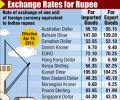
Forex dealers said strength in euro against the US dollar overseas and increased capital inflows supported the rupee.

The local currency had lost 16 paise to close at 54.17 on Monday due to fresh dollar demand from importers and some banks.

The latest macro-data from India is disquieting
Rupee gained on fresh selling of dollars by banks ahead of the RBI policy meeting.

Dollar selling by exporters and banks also supported the rupee, forex dealers said.

Forex dealers said besides dollar's gains against euro in the overseas markets on worsening euro-zone debt crisis amid growing fears that Spain may need a full bailout, a weak opening in the stock market also put pressure on the local unit.

India's foreign exchange reserves surged $5.04 billion in the week ending March 28, its biggest weekly rise in four months, as the central bank started to buy dollars regularly in an effort to build up its defences against any potential global turmoil.

The rupee depreciated 39 paise to an all-time low of 82.69 against the US dollar in early trade on Monday as elevated crude oil prices and risk-averse sentiment among investors weighed on the local unit. Moreover, a negative trend in domestic equities and firm American currency sapped investor appetite, forex traders said. At the interbank foreign exchange, the rupee opened at 82.68 against the greenback, then slipped further to 82.69, registering a fall of 39 paise over its previous close.
Fresh demand for the American unit from importers put pressure on the rupee.
The rupee on Thursday lost 25 paise to 55.72 against the US dollar in early trade at the InterbankForeign Exchange market as the American currency gained strength against other currencies overseas.

In the last four days, rupee has lost 104 paise against the dollar.
Increased demand for the US currency from importers put pressure on the rupee.

The reserves rose to $501.70 billion helped by a whopping rise in foreign currency assets, the latest data from the Reserve Bank of India.

Forex dealers said a higher opening in the domestic equity market and dollar's weakness against other currencies overseas after the US Federal Reserve kept its easing policy unchanged also supported the rupee.

The rupee declined by 10 paise to close at 79.23 (provisional) against the US dollar on Friday, tracking the strength of the American currency in the overseas market. At the interbank foreign exchange market, the local currency opened at 79.20 and finally ended at 79.23, down 10 paise over its previous close of 79.13. "Gains for the currency were short-lived even after RBI announced forex related measures. "Pound held on to its gains after Boris Johnson said he was quitting as prime minister following a rush of ministerial resignations and calls for him to go," said Gaurang Somaiya, Forex & Bullion Analyst, Motilal Oswal Financial Services.
